

There's butter... and then there's butter! This month on Kitchen Geekery, Dr. J. walks us through the different kinds of butter, explains why they're different and how they affect your baking!
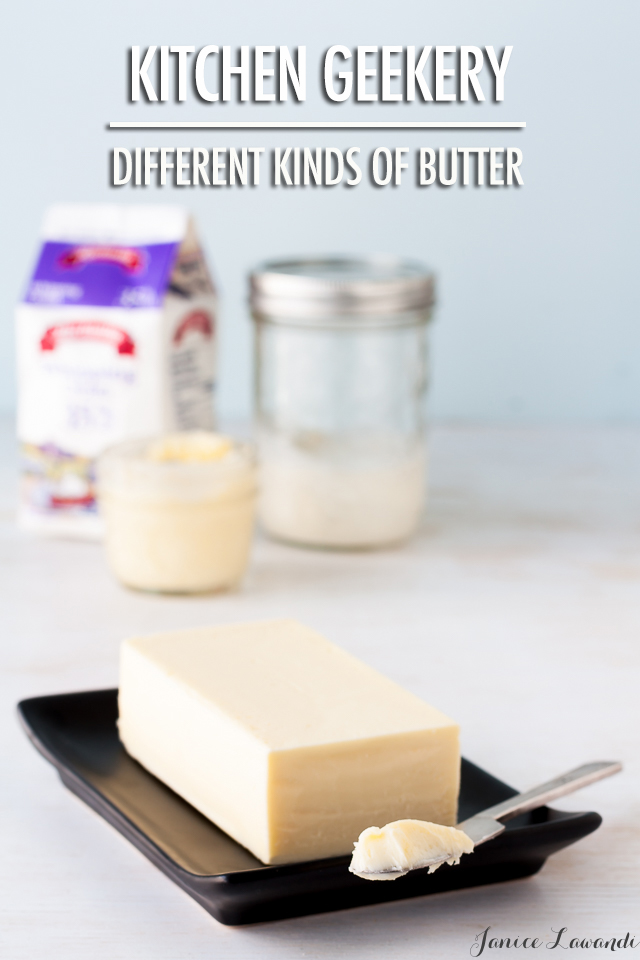
Is there anything better than butter? Oh sure, you can cook and bake with pretty much any fat you’d like, but let’s be honest, we all love butter. It gives our recipes a certain richness and a creamy flavour that's like no other. Did you know there's more than one kind of butter?
How is cream transformed into butter?
The fat in cream is largely stored in fat globules. To transform that cream into butter, the fat globules have to be damaged and broken (like through churning and mechanical agitation), releasing the fats that can then come together to form a mass, expulsing water and air. That mass is butter.
Sweet cream butter vs cultured butter
Sweet cream butter is the most common type of butter available to us in North America, usually available unsalted and salted, made from pasteurized cream and usually about 80 percent fat. Cultured butter is made from cream that's been spiked with bacterial cultures that sour the cream ever so slightly, transforming lactose to lactic acid, before it’s churned into butter. The flavour of cultured butter is different, with a slight tang because of the acid and other aroma compounds produced by the bacteria.
Higher fat butter
European-style butter is prized for its higher fat content, usually around 84 to 85 percent, and lower water content. European-style butter is especially useful when making laminated doughs, flaky pastries, and any doughs that involve layers of fat, because less water means the layers of pastry are less likely to stick together, which implies more distinct layering. The more distinct, flaky layers, the better.
Brown butter
Brown butter, also known as beurre noisette, is my absolute favourite. I’m pretty sure you could lure me into a trap by lacing it with the scent of brown butter. The butter is boiled so the water evaporates and the milk solids separate out. Those milk solids then caramelize and brown, releasing an intoxicating nutty aroma. I highly recommend browning butter and playing around with it in the kitchen; it makes a great sauce for pumpkin ravioli and adds a nutty richness to baked goods.
Clarified butter and ghee
In many hot countries, people often clarify their butter by gently heating the butter, evaporating off the water and then separating out the milk solids, yielding clarified butter. Removing the water and milk solids prolongs the shelf life of butter significantly. It also allows you to heat butter to a higher temperature: regular butter burns around 250ºF, while clarified butter can be heated to 400ºF. Some regions take the clarifying a step further: the milk solids are even browned before separating them from the clear liquid fat, also known as ghee.
A note on reduced-fat butter
I don’t really want to talk about reduced-fat butter, but I will say this: producers reduce the fat by adding a lot of water to the product (and sometimes they add flavours too!), but it’s still sold in stores at pretty much the same price as regular butter. So, unless you have money to spare on watered-down butter, why bother?
Keep that butter wrapped tightly in the original wrapper!
I have a knack for tearing the butter wrapper when I open a cold block of butter, but even so, I continue to use the original wrapper until the butter runs out. Why? Because that foil wrapper is actually lined with paper so that the butter doesn’t touch the foil. If you try wrapping your butter in regular tin foil, you'll actually speed up fat oxidation and the butter will turn rancid more quickly.
You can make butter at home
I learned to make butter at a food conference years ago. It’s actually a really great activity to do with kids. Hand them a closed mason jar with some cream in it (or a well-sealed plastic container for safety reasons) and then let your kids shake the life out of it, essentially forming whipped cream and then shaking it some more to transform it into butter. This can take a lot of shaking, like 20 minutes worth, so you can always opt to make it in your stand mixer too. Use the best cream you can get and homemade butter makes a great hostess gift along with homemade bread. Perhaps don't bake with your homemade butter since the percentage of fat may vary significantly from what you're used to.
- 2 cups (500 mL) whipping cream
- Ice water
- Salt (optional)
- In the bowl of a stand mixer fitted with the whisk attachment, overwhip the cream on medium–high speed until a solid mass forms and liquid separates out. The cream will first go through a lovely whipped cream stage, then it goes grainy, and eventually forms a mass of butter.
- Strain off the liquid through a cheesecloth-lined strainer and rinse the mass of butter in a bowl of ice water, pressing the butter to really push out the cloudy liquid. Drain and repeat this several times until the water stays clear.
- If you’d like salted butter, salt to taste, working it in with your hands.
- Pack your homemade butter into a jar and store it in the refrigerator.
Kitchen Geekery is written by Janice Lawandi. Janice is a PhD-chemist-turned-baker, which is why she loves to use science to understand and solve problems in the kitchen. She is currently working as a recipe tester and writer in Montreal, QC. Visit Janice’s blog, The Bake School, for more baking science and inspiration. You can also follow her on Facebook and Instagram.

You can unsubscribe any time!


Brown butter adds such great flavour to baked goods! It’s my fav too! I love this!
I find making brown butter is like aromatherapy. It’s good for the soul!
Lots of great information here! Good to know all about the butter 😉
Thanks! I hope it will be helpful 🙂
I remember making butter this way back when I was a kid. I was taking part in a day camp at a historical site (yes folks, I’ve always been this cool!), and we were all handed small mason jars to shake. I don’t remember anyone dropping them, and it was so cool to have my own homemade butter to take home at the end of the day.
I’m pretty sure that if I tried to make butter that way now, I’d be so sore the next day 😛
Yeah, it’s really quite the arm workout. I gave up at whipped cream, added sugar, and ate it 😉
Apparently adding a marble can help speed things up, but I haven’t tried that yet.
I think making it in the mixer is so much easier!
Half my body fat must come from brown butter, although technically the browning is most likely due to a Maillard reaction between casein and lactose instead of caramelisation. Good tip on the butter storage – I never thought of that!